


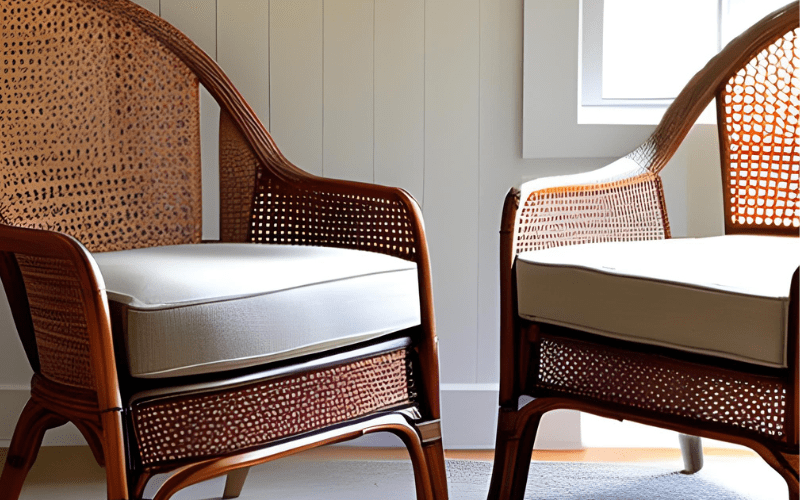
Whether used for seats or backs, cane furniture is making a comeback. It’s not a new trend, but one that was very popular in the ’70s.
Judith Grauer, who heads up chair seat weaving at the Silver River Center for Chair Caning in North Carolina, says that hand-woven cane is making a comeback.
Importance of chair caning as a versatile and arti
The art of chair caning repair is a time-honored furniture crafting and repair skill that hasn’t changed much over centuries. It is a versatile and affordable technique that can be used to create, revive or restore old chairs, including those found at flea markets and antique stores.
Whether it’s a traditional caned chair or one made from pressed cane, woven rush, seagrass, Danish cord, or Shaker tape, seat weaving with natural materials is gaining in popularity again. It’s a trend that’s fueled by a renewed interest in traditional styles of furnishings.
While caned furniture may appear dated to some, the fact is that it is more durable than upholstery and will last for generations if properly cared for. Moreover, it is an eco-friendly alternative to more synthetic materials. Additionally, caned furniture looks good in a variety of interior design settings. And despite the ebb and flow of home decor trends, people tend to keep cane furniture and repair it rather than discard it.
Overview of contemporary chair caning styles and t
Many furniture styles are characterized by their seating. A chair that is stylish and comfortable can make the room. However, chair seats can become worn and uncomfortable over time. A reweaving of the seat can restore the chair to its original condition and add comfort and style to the decor.
Among the current seat weaving trends are cane, wicker, and rush. Cane seating is popular in classic Mid-Century Modern, Scandinavian, and Hollywood Regency designs.
Woven seats have been a global trade for centuries. They replaced upholstery that tended to harbor vermin. In the 1700s rattan and other weaves were common in England, France and Portugal.
Today, reed cane furniture is a staple at some home stores like Pottery Barn and Crate and Barrel. It is also available at vintage and secondhand shops. And, some online retailers carry caned chairs in of-the-moment disco-glam silhouettes.
How contemporary chair caning adds aesthetic value
Chair caning is a popular seat-weaving technique that adds a unique aesthetic to furniture pieces. The material is derived from the stem or bark of the rattan palm (Calamus rotan), which grows in tropical countries around the world. It can be woven into everything from footstools and headboards to cabinets and guitar amps.
In colonial Asia, rattan grew in popularity due to its durability and portability. The pliable material can be used for seating and other household goods, and it is much lighter than solid wood or upholstered furniture, making it easier to transport in a humid climate.
Currently, you can find rattan and cane furniture in stores from luxury design brands like Kam Ce Kam to direct-to-consumer brand Industry West. Marcel Breuer’s Cesca side chair ($289, Amazon), for example, uses natural cane to accent a tubular steel base. The modern-looking piece is also featured in the waiting room of Manhattan-based healthcare membership company Parsley Health.
Traditional Chair Caning Techniques: A Brief Recap
If you’re interested in learning traditional repair chair caning techniques, the first step is finding a good project. This can be a chair seat that needs re-caning or a simple footstool. You should also find a chair that is square or rectangular in shape. Round and horseshoe-shaped chairs are more difficult and not a great choice for your first attempt.
Another option is to take a chair caning repair class. These classes offer invaluable tips and tricks that you can use to complete your chair repair or to start a new hobby or career. During the course, you’ll learn the six-way hand caning technique, which is the best choice for most chairs.
After you’ve mastered the basics, you can try other types of weaves. Wheat wrap rush seats, for example, are a popular choice for antique chairs. This type of seat is made of pre-twisted rush that’s then wrapped with wheat.
Overview of traditional chair caning techniques
Traditional chair caning repair involves weaving individual strands of cane through holes that are drilled around the frame of the seat or back. This is called hole-to-hole hand caning and is the most common type of chair caning. It can be done by hand or with a machine and is a great way to update or repair an old chair.
The rattan palm (genus Calamus Rotan) is the main material used in traditional chair caning. This species of palm is grown commercially in tropical regions, primarily in Malaysia, Singapore, and Hong Kong. The outer skin or bark and inner pith are harvested for basket making and wickerwork.
The first step is to mark the center holes in the front and back edges of the chair seat frame using wood pegs. Then draw two horizontal strands, starting from the center and going to either side. You will then weave the vertical strands under and over the horizontal strands until you reach the corner hole in the seat. If you really want to get more information about chair caning repair you can visit these links below
https://www.greenkeep.co.uk/chair-caning-repair/
https://newshubfeed.com/business/chair-caning-repair
Brief history and evolution of chair caning styles
Chair caning is an ancient technique that uses thin strips of rattan or cane to create strong and durable seats and backrests for chairs and other furniture. It is a timeless style that never goes out of fashion and can be used to create many different looks.
The oldest type of cane weaving is traditional hole-to-hole hand caning, which was used on chairs until the 1700s. This seven-step process involves weaving a series of octagon holes into a flat cane seat bottom.
As manufacturing techniques improved in the 1800s, pressed cane was introduced, creating a more durable and easier-to-maintain alternative to hand-woven cane. Today, most chair seats are made of either pre-woven cane or rush and can be woven in a variety of woven patterns. Other styles of woven seat weaving include fiber and natural rush, machine cane webbing, flat reed caning, Danish cord, shaker tape, and hickory or oak splint/split weaving.
