


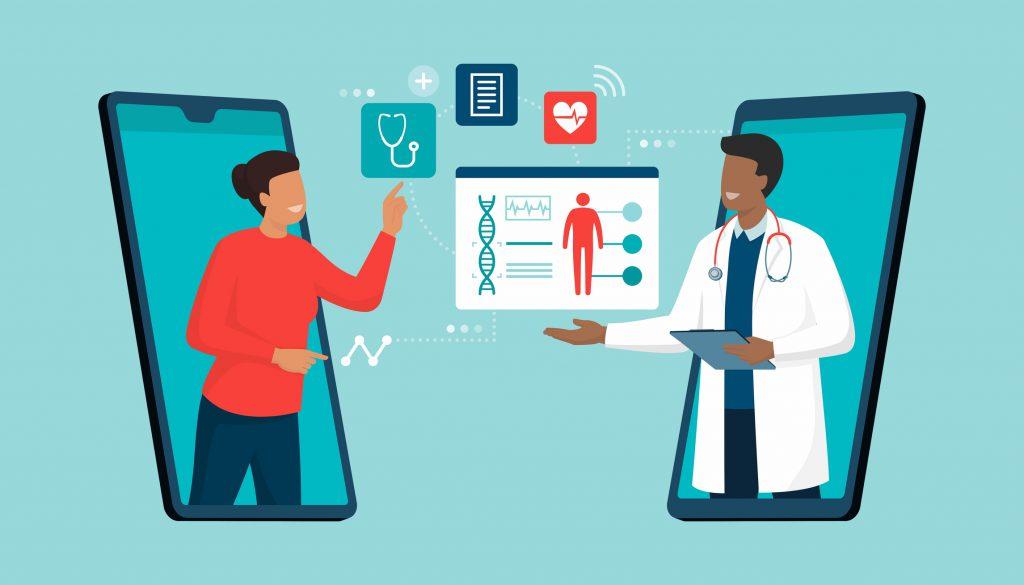
Healthcare is among the most critical sectors for our survival. We rely on healthcare infrastructures every now and then to treat several illnesses and diseases. Back in the day, healthcare entities did not have the technology to handle multiple patients at once. In 2023, healthcare entities can leverage the power of technology to improve patient outcomes. Not to forget, healthcare entities have the latest equipment to provide the best care to patients. With the rise of technology and new-age equipment, telehealth is expanding daily. Remote medicine applications have taken the world by storm in the past few years. Read on to understand how remote medicine is transforming healthcare.
Understanding telehealth sector
Before delving deeper, it is crucial to understand the role of the telehealth sector. Telehealth concerns with the delivery of healthcare services with the help of telecommunication technologies. It is also concerned with sharing healthcare information and electronic patient data when required. Telecommunication technologies like video conferencing, mobile apps, telephone, remote monitoring, and health information exchange. One can say that telehealth has made healthcare services accessible to more people. For example, patients can now connect with clinicians via video conferencing platforms. It eradicates the need to visit a physical hospital or clinic every time. These things did not exist a few decades ago in the healthcare sector.
Telehealth includes several activities essential for the survival of healthcare entities. Two clinicians discussing a case over the phone is also an example of telehealth. Similarly, a surgeon checking up on the patient’s condition via remote monitoring tools is an application of telehealth. You must have seen how healthcare entities
offer remote medical services with the help of telecommunication technologies in rural areas. The latest Telehealth Trends have revolutionised the healthcare sector completely. Telehealth trends like wearable, sensors, and robotic surgery have made healthcare services more accessible. Also, patients can now access healthcare services and information remotely. In short, telehealth is a broad term encompassing telemedicine, remote medicine, remote clinical services, and other offerings.
Understanding remote medicine and how it is transforming healthcare
People often consider telemedicine, telehealth, and remote medicine similar. Remote medicine is similar to telehealth, as it is also concerned with offering healthcare services with the help of telecommunication technologies. Digital communication channels are also used in remote medicine to offer the required care to patients. Remote medicine might be referred to as telemedicine by healthcare professionals. When you delve deeper, you will know that telehealth is a broader term that includes telemedicine as a subset. Telemedicine focuses on the delivery of medical services via telecommunication technologies. On the other hand, telehealth focuses on delivering medical and non-medical services, thus including telemedicine as a subset.
Now that you understand the basic terminology, you must know the telehealth trends.
Here’s how remote medicine is transforming healthcare:
- Remote medicine is removing geographical boundaries for healthcare entities. Patients can now connect with an experienced doctor in a foreign country via video conferencing platforms. Also, healthcare services have become more accessible, especially for people living in remote and rural areas.
- Remote medicine has allowed healthcare entities to save time while dealing with patients. Clinicians and doctors can deal with a greater number of patients simultaneously. Not to forget, remote medicine has increased the convenience for patients. Patients do not have to sit in waiting rooms for hours for their turn. They can book an appointment and connect with the doctor via a video conferencing platform when the time comes.
- Remote medicine has allowed healthcare entities to enhance follow-up care, post-operative support, and chronic disease management. For example, healthcare entities do not require patients to visit repeatedly after surgery. They can track the patient’s condition remotely and extend the required support.
- Many telehealth trends focus on enhancing patient engagement. With the help of wearables, remote monitoring tools, and next-gen mobile applications, healthcare entities are keeping patients engaged. It allows patients to make timely decisions and improve their health.
In a nutshell
Telehealth has bought a paradigm shift in the healthcare sector for good. Healthcare entities have made services more accessible with the help of technology. Professionals working in the healthcare industry must be familiar with the latest telehealth trends. It will allow them to use technology to their advantage while offering healthcare services. Learn more about the role of remote medicine now!
