


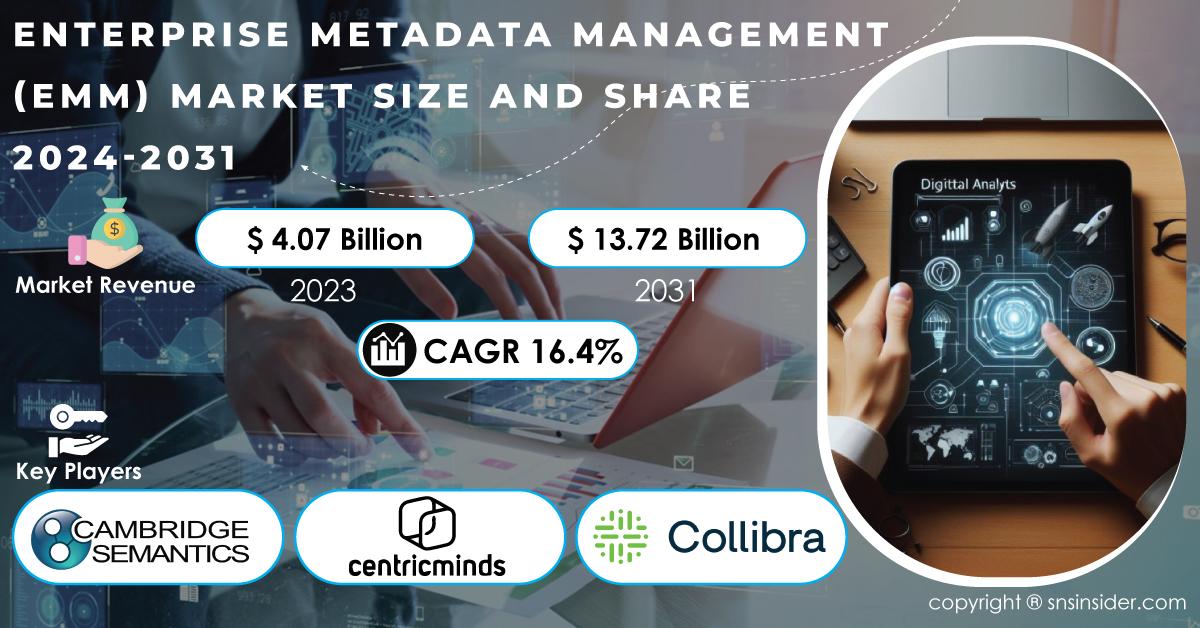
Enterprise Metadata Management Market Scope and Overview
As enterprises increasingly rely on data-driven decision-making, the demand for robust metadata management solutions has surged. These solutions help organizations maintain data integrity, streamline data integration processes, and adhere to regulatory requirements. This report delves into the competitive landscape, market segmentation, growth drivers, and concludes with insights on the future of the Enterprise Metadata Management Market.
Enterprise metadata management (EMM) is a crucial component in the landscape of data governance and management. It involves the systematic organization, management, and utilization of metadata, which provides valuable context for data assets across an organization. Metadata, often described as “data about data,” encompasses information about data’s origin, structure, relationships, and usage. Effective metadata management enhances data quality, ensures compliance, and supports decision-making processes by providing a clear and organized view of data assets.
Competitive Analysis
The enterprise metadata management market features a diverse array of key players, each offering unique solutions and capabilities.
- ASG Technologies
- Cambridge Semantics
- CentricMinds
- Collibra
- Data Advantage Group
- IBM
- Informatica
- Oracle
- SAP
- Talend
- Other Players
The market also includes other players who contribute to its diversity and innovation, each offering specialized solutions or focusing on specific aspects of metadata management.
Enterprise Metadata Management Market Segmentation
The enterprise metadata management market is segmented based on deployment type, application, metadata type, component, and end-use. Each segmentation provides insights into different facets of the market:
On The Basis of Deployment Type:
- On-Premise: On-premise deployment involves installing and managing metadata management systems within an organization’s own infrastructure. This approach offers greater control over data security and customization but requires significant investment in hardware, software, and IT support. On-premise solutions are often preferred by large enterprises with complex data environments and stringent security requirements.
- Cloud: Cloud deployment refers to hosting metadata management systems on cloud platforms provided by third-party vendors. Cloud-based solutions offer flexibility, scalability, and cost-efficiency by eliminating the need for on-site infrastructure and reducing maintenance overhead. Cloud deployment is increasingly popular among organizations seeking to leverage cloud computing benefits, such as rapid deployment and access to advanced features.
On The Basis of Application:
- Governance and Compliance Management: Metadata management solutions for governance and compliance focus on ensuring that data practices adhere to regulatory requirements and organizational policies. These solutions support data stewardship, data cataloging, and compliance reporting, helping organizations manage data assets and meet legal and regulatory standards.
- Risk Management: Risk management applications involve using metadata to identify and mitigate data-related risks. This includes managing data privacy, security, and integrity risks. Metadata management tools for risk management help organizations detect potential vulnerabilities, assess risks, and implement controls to protect data assets.
- Product and Process Management: Metadata management solutions for product and process management support the organization and optimization of data related to products and business processes. These tools help track product development, manage process workflows, and ensure that data is aligned with organizational objectives.
- Incident Management: Incident management applications involve using metadata to manage and respond to data-related incidents, such as data breaches or system failures. Metadata management tools for incident management help organizations investigate incidents, track their impact, and implement corrective actions.
- Others: This category includes metadata management applications that do not fit into the aforementioned categories but are relevant to specific organizational needs or industry requirements.
On The Basis of Metadata Type:
- Business Metadata: Business metadata provides context about the business meaning and usage of data. It includes information about data definitions, business rules, and data ownership. Business metadata helps organizations understand how data is used in business processes and supports data governance and decision-making.
- Technical Metadata: Technical metadata describes the technical aspects of data, such as data structures, formats, and storage details. It includes information about database schemas, data types, and system configurations. Technical metadata is essential for data integration, data migration, and system management.
- Operational Metadata: Operational metadata pertains to the operational aspects of data, including data lineage, data flow, and data usage statistics. It helps organizations track data transformations, monitor data quality, and manage data operations effectively.
On The Basis of Component:
- Tools: Metadata management tools encompass software applications that support various aspects of metadata management, including data cataloging, data lineage, and data governance. These tools provide functionalities for managing and analyzing metadata, facilitating data integration, and ensuring data quality.
- Services: Metadata management services include professional and managed services provided by vendors to support the implementation, optimization, and maintenance of metadata management systems. Services may include consulting, training, and technical support, helping organizations maximize the value of their metadata management solutions.
On The Basis of End-Use:
- BFSI (Banking, Financial Services, and Insurance): In the BFSI sector, metadata management is crucial for ensuring data accuracy, compliance, and risk management. Financial institutions use metadata management solutions to manage regulatory reporting, data governance, and fraud detection.
- Telecommunication & IT: Metadata management in the telecommunication and IT sector supports data integration, network management, and service optimization. Telecom operators use metadata management tools to manage network data, customer information, and service performance.
- Retail and Ecommerce: Retailers and e-commerce companies use metadata management solutions to optimize product data, manage customer information, and enhance supply chain visibility. Metadata management helps in personalizing customer experiences and improving operational efficiency.
- Healthcare and Lifesciences: In healthcare and lifesciences, metadata management supports data integration, patient information management, and regulatory compliance. It helps healthcare organizations manage clinical data, research data, and patient records effectively.
- Manufacturing: Manufacturing companies use metadata management to manage production data, supply chain information, and process documentation. Metadata management supports operational efficiency, quality control, and regulatory compliance in manufacturing.
- Government and Defense: Government and defense organizations use metadata management solutions for data governance, security, and compliance. Metadata management helps manage sensitive data, track data lineage, and ensure regulatory adherence.
- Energy and Utilities: In the energy and utilities sector, metadata management supports the management of operational data, asset information, and regulatory compliance. It helps optimize asset management, track energy consumption, and ensure data integrity.
- Media and Entertainment: Metadata management in media and entertainment supports content management, digital rights management, and audience analytics. It helps manage media assets, track content usage, and enhance content distribution strategies.
- Others: This category includes end-use industries not covered by the specific categories above but that still benefit from metadata management solutions tailored to their unique needs.
Key Growth Drivers of the Enterprise Metadata Management Market
Several factors are driving the growth of the enterprise metadata management market:
- The growing volume and variety of data generated by organizations require effective metadata management to ensure data quality and integration. As data environments become more complex, the demand for metadata management solutions that provide a unified view of data assets increases.
- Stringent regulatory requirements related to data privacy and governance drive the need for metadata management solutions that support compliance and reporting. Organizations are investing in metadata management tools to meet regulatory standards and avoid penalties.
- The shift towards data-driven decision-making requires accurate and accessible metadata to support analytics and business intelligence. Metadata management solutions help organizations make informed decisions by providing context and clarity about data assets.
- The ongoing digital transformation across industries is fueling the adoption of metadata management solutions. Organizations are leveraging metadata management to support digital initiatives, such as data integration, cloud migration, and data governance.
- Effective metadata management is essential for establishing robust data governance practices. Organizations are investing in metadata management tools to improve data stewardship, ensure data quality, and support data governance frameworks.
Key Questions Answered in the Market Research Report
Market research reports on enterprise metadata management typically address the following key questions:
- What is the current size and growth rate of the enterprise metadata management market?
- What are the key trends and developments shaping the market?
- Who are the major players in the market, and what are their market shares?
- What are the key drivers and challenges affecting the market?
- What are the growth opportunities and potential areas for investment?
- How is the market segmented by deployment type, application, metadata type, component, and end-use?
- What are the regional market dynamics and competitive landscape?
- What are the future prospects and forecast for the market?
Conclusion
The enterprise metadata management market is a dynamic and rapidly evolving segment of the data management industry. With the increasing complexity of data environments, regulatory requirements, and the need for data-driven decision-making, metadata management solutions have become essential for organizations across various industries.
Key players in the market offer a range of solutions and services that address different aspects of metadata management, from governance and compliance to risk management and operational efficiency. The market’s segmentation into deployment types, applications, metadata types, components, and end-use industries provides insights into the diverse needs and preferences of organizations.
The growth of the market is driven by factors such as data complexity, regulatory compliance, digital transformation, and enhanced data governance. As organizations continue to navigate the evolving data landscape, metadata management will play a critical role in ensuring data integrity, supporting analytics, and enabling effective data governance.
Future developments in the market will likely focus on leveraging advanced technologies, such as artificial intelligence and machine learning, to enhance metadata management capabilities. By staying abreast of market trends and investing in innovative solutions, organizations can optimize their metadata management practices and gain a competitive edge in the data-driven economy.
Table of Contents
- Introduction
- Industry Flowchart
- Research Methodology
- Market Dynamics
- Impact Analysis
- Impact of Ukraine-Russia war
- Impact of Economic Slowdown on Major Economies
- Value Chain Analysis
- Porter’s 5 Forces Model
- PEST Analysis
- Enterprise Metadata Management (EMM) Market Segmentation, by Deployment Type
- Enterprise Metadata Management (EMM) Market Segmentation, by Application
- Enterprise Metadata Management (EMM) Market Segmentation, by Metadata Type
- Enterprise Metadata Management (EMM) Market Segmentation, by Component
- Enterprise Metadata Management (EMM) Market Segmentation, by End-Use
- Regional Analysis
- Company Profile
- Competitive Landscape
- USE Cases and Best Practices
- Conclusion
Contact Us:
Akash Anand – Head of Business Development & Strategy
info@snsinsider.com
Phone: +1-415-230-0044 (US) | +91-7798602273 (IND)
About Us
SNS Insider is one of the leading market research and consulting agencies that dominates the market research industry globally. Our company’s aim is to give clients the knowledge they require in order to function in changing circumstances. In order to give you current, accurate market data, consumer insights, and opinions so that you can make decisions with confidence, we employ a variety of techniques, including surveys, video talks, and focus groups around the world.
Read Our Other Reports:
Cloud-based Contact Center Market Share
Supply Chain Management Market Report
