


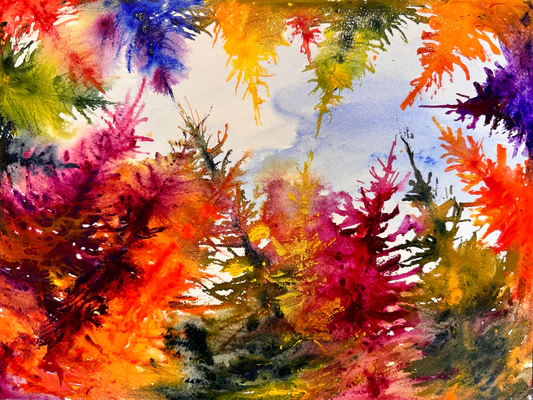
Watercolor painting is an art form that has been around for centuries, with roots dating back to ancient China and Japan. In recent years, modern watercolor artists have been exploring the depths of emotion in their works, using color, texture, and composition to create evocative and meaningful pieces.
This blog post will explore how modern watercolor art expresses emotions and how to use these techniques to create your own emotionally charged works.
Understand the Role of Color
The first step in exploring the depths of emotion in modern watercolor art is to understand the role of color. Colors have the power to convey emotions, and how you use them in your paintings can significantly impact the viewer’s emotional response. For example, warm colors such as red, orange, and yellow are often associated with feelings of energy, passion, and warmth. On the other hand, cool colors such as blue, green, and purple are often associated with feelings of calm, tranquility, and sadness.
Note 1: In modern watercolor art, artists use color to create emotional depth and nuance. They may use a limited palette to create a specific mood or play with contrasting colors to create tension and drama. For example, an artist might use a warm yellow-orange background to create a sense of energy and vitality and then use cooler blues and greens to create a calming effect in the foreground.
2. Texture
The texture is another important element in creating emotionally charged watercolor art. Texture can add depth and interest to a painting and convey emotion. For example, rough, jagged brushstrokes can create a sense of tension or agitation, while soft, flowing strokes can create a sense of calm and serenity.
Note 2: Modern watercolor artists often experiment with different textures to create unique effects in their paintings. Some use salt to create a crystalline texture, while others use plastic wrap to create a mottled effect. Whatever technique you choose, texture can add more emotional depth to your paintings.
3. Composition
Composition is also important when exploring the depths of emotion in modern watercolor art. The way you arrange the elements in your painting can create a sense of harmony or tension and can convey different emotions. For example, a painting with a symmetrical composition can create a sense of balance and calm, while an asymmetrical composition can create a sense of movement and energy.
Note 3: Watercolor landscapes can be particularly effective in conveying emotion. Modern watercolor artists often experiment with composition to create emotionally charged works, including watercolor landscapes. They may use a dynamic, off-center composition to create a sense of movement and energy or a simple, centered composition to create a sense of stillness and serenity.
One of the key benefits of watercolor painting is its versatility. Watercolor paints can be used in various ways to create different effects, from delicate washes to bold, vibrant strokes. This versatility makes watercolor an ideal medium for exploring the depths of emotion in modern art.
4. Experimentation
To create emotionally charged watercolor paintings, it’s important to experiment with different techniques and find what works for you. Start with color, texture, and composition, and see how different combinations create different emotional effects. Don’t be afraid to take risks and try new things, as this is often where the most interesting and unique works of art come from.
To Sum Up:
Exploring the depths of emotion in modern watercolor art is a rewarding and fascinating journey. By using color, texture, and composition to create emotionally charged works, modern watercolor artists are pushing the boundaries of traditional painting techniques and creating beautiful and meaningful works.
Whether you’re a beginner or an experienced artist, there’s no limit to what you can achieve with watercolor painting. So grab your paintbrush and start exploring the depths of emotion today!
