


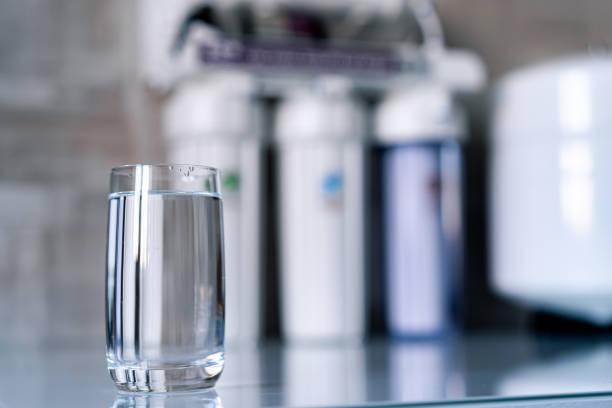
If you’re considering investing in reverse osmosis systems for your home or business, you may be wondering if it’s worth the investment. Reverse osmosis systems can help to purify your drinking water and reduce contaminants, but are they really worth the cost? In this blog post, we’ll explore the benefits and drawbacks of investing in reverse osmosis systems, so you can decide whether or not it’s a worthwhile investment for you.
What is reverse osmosis?
Reverse osmosis is a process of purifying water by removing impurities, minerals, and dissolved solids from it. It is a commonly used method of water treatment and is often used in industrial applications, but it has become increasingly popular as a home water filtration system in recent years.
Reverse osmosis systems work by pushing water through a semi-permeable membrane that only allows pure water molecules to pass through. The impurities are left behind and are either collected in a waste stream or discharged down the drain.
One of the biggest benefits of using a reverse osmosis system is that it can produce water that is free of harmful contaminants such as bacteria, viruses, and chemicals. It can also improve the taste and odor of the water, making it more palatable to drink.
However, there are some drawbacks to using a reverse osmosis system.
For one, the process can be quite slow, so it may not be the best option for households that require large quantities of water quickly. Additionally, reverse osmosis systems can be costly to install and maintain, which may make them less feasible for some households.
Despite these potential drawbacks, many people find that investing in a reverse osmosis system is worth it for the peace of mind that comes with knowing their drinking water is safe and clean. If you’re considering investing in a home water filtration system, it’s worth exploring your options to determine if reverse osmosis is the right choice for you.
How do reverse osmosis systems work?
Reverse osmosis is a process that removes contaminants and impurities from water by applying pressure to the water molecules as they pass through a semi-permeable membrane. This technology has been used in industrial applications for decades and is now becoming increasingly popular as a home water filtration system.
A reverse osmosis system typically consists of several stages. The first stage is a pre-filter that removes larger particles such as sediment, sand, and silt. The second stage is the reverse osmosis membrane, which filters out even smaller particles, such as chlorine, fluoride, and other chemicals, as well as microorganisms like bacteria and viruses.
After passing through the membrane,
the water goes through a post-filter to remove any remaining impurities, including any tastes or odors. The final stage is often a demineralization process that adds back some beneficial minerals, such as calcium and magnesium, which may have been removed during the filtration process.
One of the key benefits of a reverse osmosis system is its ability to remove contaminants that may be present in your tap water. These contaminants can include things like lead, arsenic, and other heavy metals that can be harmful to your health. By using a reverse osmosis system, you can be sure that your drinking water is free from these contaminants.
However, there are some drawbacks to using a reverse osmosis system.
One is that it can be a bit expensive to install, particularly if you want to have a professional do the installation. Additionally, because the reverse osmosis process removes minerals along with contaminants, some people may find that the water tastes a bit flat or lacks the minerals that they prefer in their water.
Overall, if you’re concerned about the quality of your tap water, home water filtration system can be a great way to ensure that you’re getting clean, safe, and great-tasting water. While it may involve some upfront costs, the long-term benefits can be well worth it.
